

How Do You Grow Potatoes in Pots Without a Garden?
Last Updated: November 1, 2026
Quick Summary
To grow potatoes in pots, plant certified seed potatoes 4 to 6 inches deep in a container of at least 10 gallons with drainage holes, using loose potting mix and a spot with six or more hours of direct sun. Fill the pot only one-third full at planting, then hill with more mix as shoots grow.
Use certified seed potatoes, not grocery-store spuds, which are often treated to stop sprouting.
Plant about 2 to 3 seed pieces per 10 gallons and space pieces 8 to 12 inches apart.
Water when the top inch of mix feels dry, usually every two to three days in warm weather.
Hill the stems every time growth adds about 6 inches, until the pot is nearly full.
Harvest new potatoes about 10 to 12 weeks after planting, when plants flower.
Table of Contents
What You'll Need Before You Plant
You can grow potatoes for a real harvest on a balcony, patio, or sunny stoop, and it starts with a short supply list. Potatoes in containers need four things: certified seed potatoes, a food-safe pot with drainage holes, loose potting mix, and at least six hours of direct sun. Get those right and the rest is mostly patience.
Below, we'll show you exactly how to grow potatoes in pots from first sprout to final dig, including the mistakes that quietly ruin most container crops.
Your starter kit:
Certified seed potatoes, not grocery-store spuds
A container at least 10 gallons, with drainage holes
Loose potting mix, not garden soil
A sunny spot with 6+ hours of direct light
A watering can with a gentle rose
A small trowel for hilling
Grocery potatoes are a common shortcut, and a bad one. They're often treated to stop sprouting and can carry disease. Certified seed is grown and tested for that purpose, which is why the USDA's seed potato certification programs exist in the first place.
The Best Container for Growing Potatoes
The best container for growing potatoes is at least 10 gallons, roughly 16 to 18 inches across, with drainage holes in the base. Bigger is better: a 15-gallon fabric grow bag or a half-barrel gives roots room and holds moisture through hot afternoons. Small pots are the number one reason container crops disappoint. A 5-gallon bucket can work for one or two seed pieces of an early variety, but the plants run out of room fast.
Drainage, Material, and Food-Safe Choices
Drainage decides whether your tubers rot or thrive. Drill or check for holes before you fill anything, aim for at least four 1/2-inch holes in a 10-gallon pot, more in a fabric bag, which drains through its walls. Standing water plus warm weather equals soft, smelly tubers. Set the pot on bricks or pot feet so the base isn't sealed against a patio, and never let a saucer hold water under potatoes.
Material matters too. Fabric grow bags air-prune roots and keep the root zone cooler on hot afternoons, but they dry out faster, so expect to water more often. Plastic pots and half-barrels hold moisture longer and suit windy or dry sites, though dark plastic heats up in full sun, shade the pot, not the leaves, if afternoon temperatures climb. Untreated wood and food-grade plastic are safe choices. If you're reusing a bucket, confirm it never held motor oil, paint, or pesticides; a container that held those is not food-safe no matter how well you rinse it. Terracotta dries out quickly, so it suits cool, humid spots better than hot ones.
Pro Tip Match pot size to seed count: about 2 to 3 seed pieces per 10 gallons, 4 to 6 in a 15-gallon bag, and 6 to 8 in a half-barrel. Crowding a small pot is the fastest route to tiny tubers.
Before you pick a variety, it helps to know which potato varieties suit small home gardens, since compact plants and early types suit pots better than sprawling late-season kinds.
Choosing and Chitting Seed Potatoes
Chitting means letting seed potatoes sprout in a bright, cool spot before planting. If you're new to it, learn how to time your seed potato purchase for spring planting. Stand them upright in an egg carton or tray, eyes facing up, for two to three weeks. Short, sturdy green shoots are what you want; long pale ones snap off.
homegrown.garden
Buy certified seed from a grower who tests for disease. That matters in containers, where a sick tuber has nowhere to escape. Read why certified organic seed potatoes are worth it.
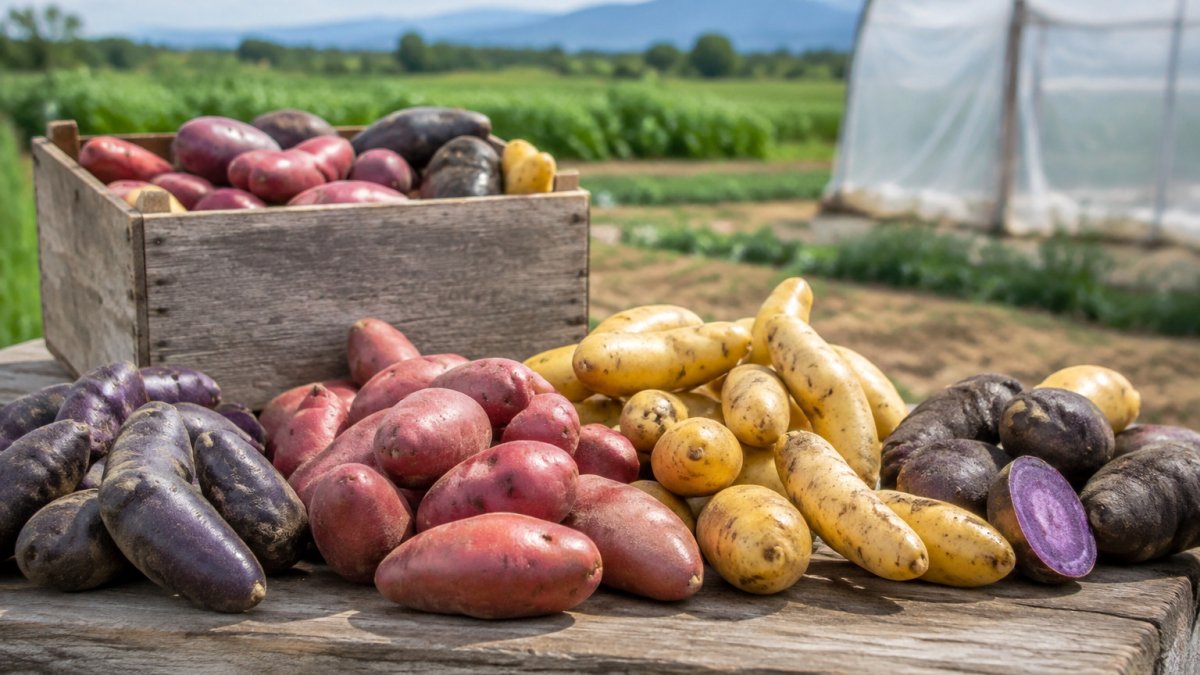
If you're ready to plant, match your pot count to the seed sizes you have available. Start small with a few tubers of several varieties if you want to try fingerlings and colored types before committing to a full order. A build-your-own sampler of small tubers suits growers planting just a few pots.
How Deep to Plant Potatoes in Pots
Plant seed potatoes about 4 to 6 inches deep in pots, with the sprouts pointing up, and space pieces 8 to 12 inches apart. Fill the container only one-third full to start. You'll add more mix as the plants grow, which is the whole trick to a heavy crop in a small space.
Small tubers can go in whole. Cut larger ones into pieces with at least two eyes each, then let the cuts dry for a day before planting (Starting a potato patch). Water gently after planting and keep the mix damp, not soaked.
How Often to Water Potatoes in Pots
Water potatoes in pots when the top inch of mix feels dry, usually every two to three days in warm weather and less in cool spells. Containers dry out far faster than garden beds, so check with a finger before you pour, and check deeper than an inch in a 15-gallon bag, where the surface can read dry while the root zone is still damp.
Deep, thorough watering beats frequent light sprinkling. Soak until water runs from the drainage holes, then let the top dry slightly. Wet leaves invite disease, so aim at the soil. A layer of mulch on top slows evaporation and keeps tubers cool.
Checking Moisture and Feeding Without Overdoing It
A finger test is the simplest check, but a cheap moisture meter or the lift test, heft the pot before and after watering, tells you more in a large container. A common pattern is a pot that feels light and sounds hollow when thumped, which means it's ready for a soak. Water in the morning when you can, so foliage dries before evening and slugs have less reason to visit.
Feeding is where container growers most often go wrong. Potting mix carries limited nutrients, and repeated watering leaches them out. Mix a slow-release or granular organic fertilizer into the mix at planting per the label rate, then feed every two to three weeks once shoots are several inches tall with a diluted liquid fertilizer, fish emulsion or a kelp-based feed works well. Stop feeding when plants flower; excess nitrogen at that stage pushes leaves at the expense of tubers.
Watch Out Overwatering and overfeeding look alike: yellowing lower leaves, soft stems, and no tuber set. Before you add more fertilizer, check drainage and let the top two inches dry out. Soggy mix plus extra nitrogen is the most common way container potatoes fail.
A final word on yield: expect roughly one to two pounds of tubers per gallon of mix for healthy plants, depending on variety and care. Set realistic expectations and you'll enjoy the dig instead of judging it.
Here are the key watering and feeding facts for container potatoes at a glance.
Item | Value | Note |
When to water | Top inch of mix feels dry | Check with a finger before pouring |
Warm-weather frequency | Every two to three days | Less often in cool spells |
How much to water | Soak until water runs from drainage holes | Deep watering beats light sprinkling |
Fertilizer at planting | Slow-release or granular organic, per label rate | Mix into the potting mix |
Liquid feeding | Every two to three weeks | Diluted fish emulsion or kelp-based feed |
When to stop feeding | When plants flower | Excess nitrogen pushes leaves over tubers |
Hilling and Earthing Up as Shoots Grow

Hilling means covering the stems with more mix as the shoots rise, leaving just the top leaves exposed. Do this every time growth adds about 6 inches, until the pot is nearly full. Buried stems form more tubers, and tubers that touch sunlight turn green and bitter.
Watch out: skip hilling and your potatoes will push above the soil line, greening in the sun. Green patches contain solanine and shouldn't be eaten. Cover exposed tubers right away with fresh mix.
When to Harvest Potatoes in Containers
Harvest new potatoes about 10 to 12 weeks after planting, when plants flower, and main crops two to three weeks after the foliage dies back. Early varieties finish fastest; late types need the full season.
For new potatoes, reach in and steal a few without lifting the plant. For storage crops, stop watering once foliage yellows, wait about two weeks, then tip the pot out. Cure the tubers in a dark, airy spot before storing.
Troubleshooting Common Container Potato Failures
Most container potato problems trace back to water, light, or temperature. Leggy pale plants need more sun. Yellowing lower leaves usually mean soggy mix or too little nitrogen. Rotting tubers point to blocked drainage.
Frost is the quiet killer. Potato foliage hates a freeze, so cover plants or move pots indoors when a late cold snap is forecast. Pests are fewer in containers, but watch for aphids on new growth and slugs in damp fabric bags.
A final word on yield: expect roughly one to two pounds of tubers per gallon of mix for healthy plants, depending on variety and care. Set realistic expectations and you'll enjoy the dig instead of judging it.
Frequently Asked Questions
How deep should a container be to grow potatoes?
Aim for at least 12 inches of soil depth, and 15 to 18 inches is better for mid and late varieties. Shallow pots leave too little room for tubers to form and dry out too fast. Five-gallon buckets, 10-gallon grow bags, and half-barrel planters all work. Whatever you choose, drill or confirm drainage holes before you fill it, because standing water rots seed pieces faster than anything else.
Can I grow potatoes from store-bought potatoes?
You can, but it is a gamble. Grocery store potatoes are often treated with sprout inhibitors and may carry disease that shows up weeks into the season. Certified seed potatoes are grown and tested for pathogens, so you start with clean stock. If you want a reliable harvest from a small container, buy certified seed potatoes rather than gambling on kitchen leftovers.
Do potatoes need to be hilled in pots?
Yes, hilling matters in containers too. As shoots reach 6 to 8 inches tall, add 2 to 3 inches of potting mix around the stems, leaving the top leaves exposed. Repeat every couple of weeks until the mix reaches within an inch or two of the rim. Buried stems produce more tubers, and the added layer keeps developing potatoes covered so they do not turn green in sunlight.
How many potatoes can you plant in one pot?
Space seed pieces about 10 to 12 inches apart. A 10-gallon grow bag fits two to three seed pieces comfortably, and a 20-gallon container handles four to five. Crowding more in gives you smaller tubers and more competition for water. If you are growing fingerling varieties, you can push slightly closer, but never let seed pieces touch each other when you plant.
Growing potatoes in pots rewards good seed above all else. If you want clean, certified organic stock in rare fingerling and colored varieties, Soda Springs Solar Gardens LLC grows early generation FY1 and single-drop seed with regenerative practices, sold direct from our small family farm. Browse the varieties, pick your tuber sizes, and get your pots started this season.
Comments