

Best Potato Varieties for Backyard Gardens
Table of Contents
Best Potato Varieties for Backyard Gardens
What Makes a Variety Right for Home Growing
Early Season Potato Varieties for Quick Harvests
Fingerlings and Specialty Types
Mid-Season Varieties: Balanced Yield and Storage
Late-Season Potatoes for Long-Term Storage
Potato Varieties for Baking and Roasting
Growing Potatoes for Containers and Small Spaces
How to Choose Seed Potatoes for Your Garden
Why Certified Seed Stock Matters
Avoiding Grocery Store Potatoes
Matching Varieties to Your Growing Season and Climate
Frequently Asked Questions
Last Updated: October 18, 2026
Best Potato Varieties for Backyard Gardens
Growing potatoes at home is simpler than most gardeners think, but choosing the right variety makes all the difference. The best potato varieties for backyard gardens depend on when you want to harvest, how you plan to cook them, and how much space you have. At Soda Springs Solar Gardens LLC, we focus on helping home gardeners select seed potatoes that will actually thrive in their backyards.
Not all potatoes are created equal. A fingerling variety won't give you the same yield as a mid-season all-purpose potato. A storage variety planted in spring won't mature before fall frost in cooler regions. The key is matching the variety to your growing season, your soil, and your kitchen goals.
What Makes a Variety Right for Home Growing
Your success depends on three core factors: maturity timing, culinary use, and storage needs. Early-maturing varieties produce tubers in 60 to 75 days, making them ideal if you have a short growing season or want multiple harvests in one year. Mid-season varieties take 75 to 90 days and offer balanced yields with decent storage potential.
Beyond timing, think about how you'll use them. Waxy potatoes hold their shape when boiled, perfect for potato salads and soups. Floury potatoes break down easily, making them ideal for mashing and baking. All-purpose varieties split the difference and work in most dishes.
Storage matters too. If you want fresh potatoes throughout the summer, choose early varieties. If you're planning to store a harvest for winter, late-season varieties with thick skins last months in cool conditions.
Early Season Potato Varieties for Quick Harvests
Early potatoes mature in 60 to 75 days, making them perfect if you want to harvest before midsummer heat arrives. These varieties produce smaller tubers but more of them per plant.
Norland produces bright red skin with white flesh and delivers consistent yields in small spaces. It's waxy enough for boiling but works in most dishes. The tubers are medium-sized and uniform, which home gardeners appreciate because they cook evenly.
Irish Cobbler is a classic white potato with thin skin and white flesh. It's an all-purpose variety that yields well early in the season.
Red Norland offers red skin with shallow eyes and white flesh. It matures quickly and produces a good number of medium tubers. This variety works well in containers and small garden plots because it doesn't need deep soil.
Fingerlings and Specialty Types
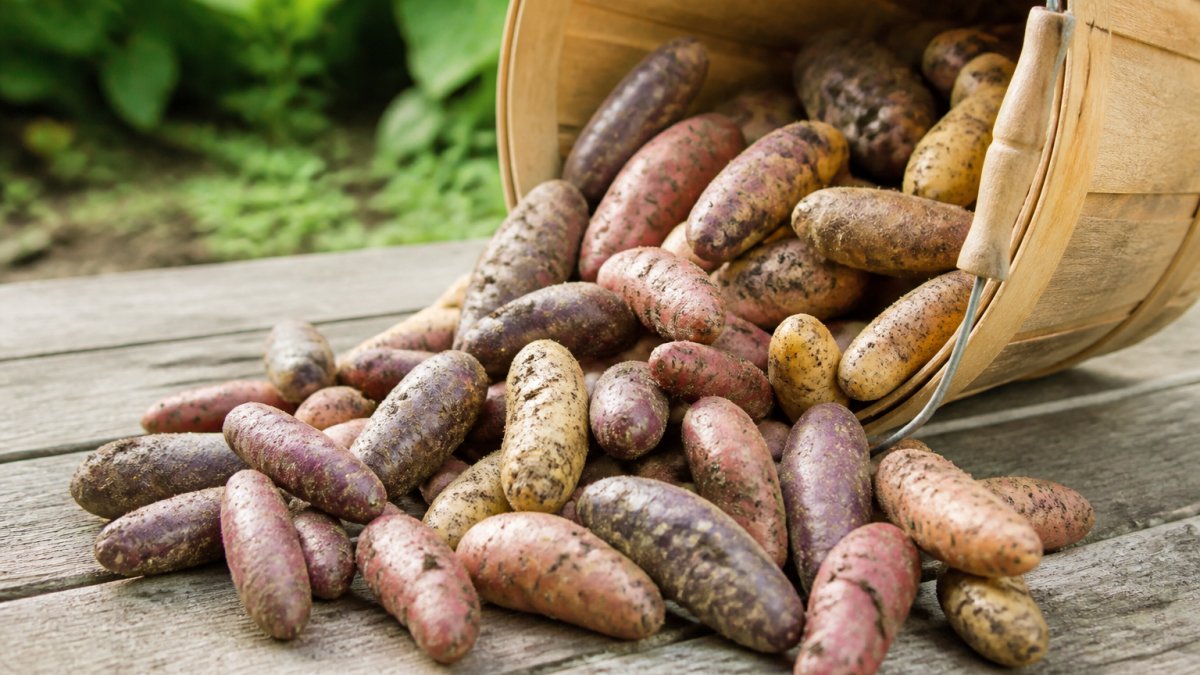
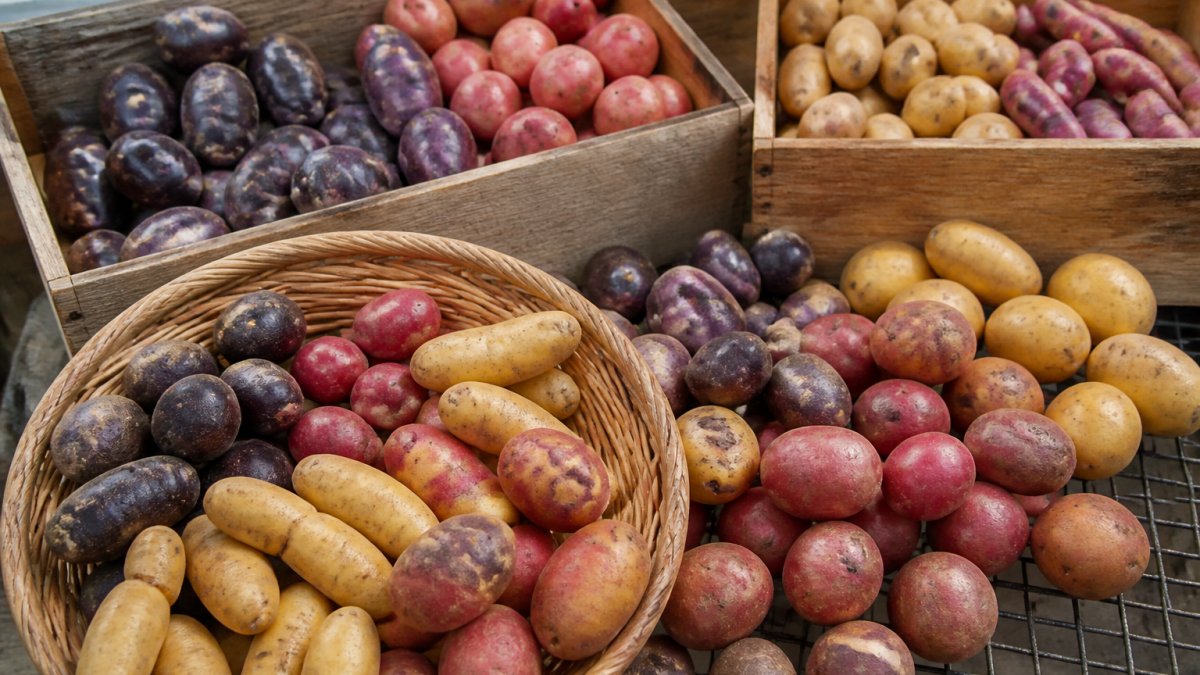
Fingerling potatoes are smaller, elongated tubers that cook quickly and have a naturally waxy texture. They're popular with home cooks because they look impressive on a plate and hold their shape perfectly when roasted or boiled.
Russian Banana produces long, thin, pale yellow tubers with yellow flesh. It has a buttery flavor and waxy texture that makes it ideal for roasting and potato salads. The yield is lower than round varieties, but the unique flavor justifies the space.
Purple Peruvian grows dark purple skin with purple flesh throughout. It's starchy and has a slightly earthy taste. Home gardeners grow this one for visual interest, the purple color persists through cooking, making an striking side dish.
Yellow Finn delivers golden skin and yellow flesh with a creamy, waxy texture. It's excellent roasted or boiled and stores better than most fingerlings. This variety produces smaller yields but grows well in containers.
Mid-Season Varieties: Balanced Yield and Storage
Mid-season potatoes mature in 75 to 90 days and produce larger yields than early varieties. They store reasonably well and work across multiple cooking methods, making them practical for home gardeners who want versatility.
The Living Farm
Yukon Gold is the workhorse of home gardens. It has thin golden skin, yellow flesh, and a naturally buttery flavor. It's all-purpose, excellent for baking, mashing, and boiling. Yukon Gold produces consistent yields and stores for several weeks under cool conditions.
Kennebec produces large, oblong white tubers with white flesh. It's floury and excellent for mashing and baking. Kennebec yields well and stores moderately, making it practical for gardeners who want to preserve a harvest.
Elba delivers red skin with white flesh and an all-purpose texture. It matures mid-season and produces good yields in most soil conditions. This variety is less common in home gardens but performs reliably.
Late-Season Potatoes for Long-Term Storage
Late-season varieties mature in 90 to 120 days and produce the highest yields per plant. They develop thick skins that protect the tubers during storage, allowing them to keep for months in a cool basement or root cellar.
Russet Burbank is the classic storage potato. It has brown skin, white flesh, and a floury texture perfect for baking and frying. Russet Burbank produces large tubers and stores exceptionally well. The yield is high, making it efficient for gardeners with limited space who want maximum production.
Katahdin produces tan skin with white flesh and a floury texture. It's an excellent storage potato that keeps for months. Katahdin tolerates various soil conditions and matures reliably even in cooler regions.
Red Norland is sometimes grown as a late-season storage crop if planted early enough. It develops thicker skin than early plantings and stores better than you'd expect from an early variety.
Potato Varieties for Baking and Roasting
Some potato varieties are simply better for specific cooking methods. Floury potatoes break down easily, which is terrible for potato salad but perfect for mashing and baking.
Russet varieties are the standard for baking because their floury texture creates fluffy interiors. Russet Burbank and Katahdin both excel here. Their starch content is higher, which means they absorb butter and sour cream beautifully.
Yukon Gold roasts exceptionally well. The natural butter flavor intensifies when roasted, and the waxy-floury balance means the outside crisps while the inside stays creamy. Many home cooks prefer Yukon Gold for roasting because it requires less added fat.
Fingerlings are the roasting specialist. Their small size means they cook through quickly and their waxy texture means they develop crispy exteriors without falling apart. Russian Banana and Purple Peruvian both roast beautifully and look striking on a plate.
Growing Potatoes for Containers and Small Spaces
Not every home gardener has a large backyard. Container growing and small-space methods work well with the right varieties. Choose compact plants that don't sprawl and produce decent yields in limited soil volume.
Red Norland is excellent for containers because it produces smaller tubers and doesn't require deep soil. Plant one seed potato per 5-gallon bucket and you'll harvest 3 to 5 pounds per container.
Fingerlings work in containers because they're naturally compact. Yellow Finn and Russian Banana both produce reasonable yields in 10-gallon containers or grow bags.
Yukon Gold adapts well to containers if you use large enough pots. A 10-gallon container per seed potato will produce 5 to 8 pounds of tubers.
The key to container success is using quality potting soil and watering consistently. Container soil dries faster than garden soil, so check moisture daily during warm weather.
How to Choose Seed Potatoes for Your Garden
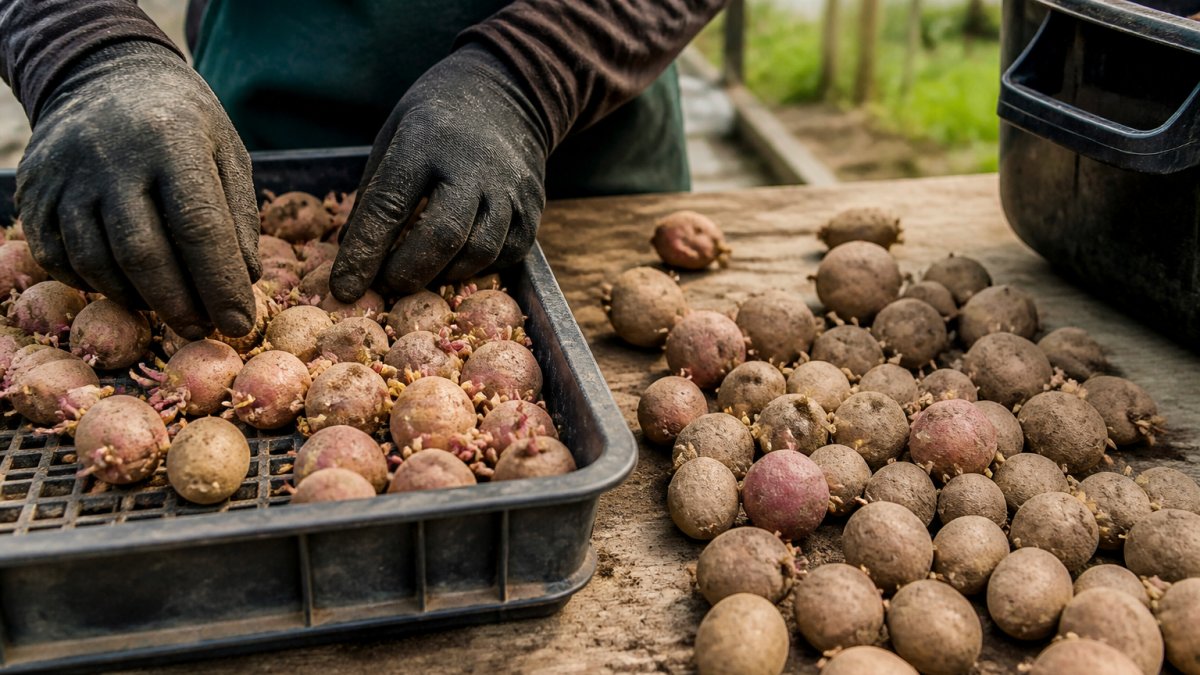
Seed potatoes are not the same as grocery store potatoes. Seed potatoes are certified disease-free, grown specifically for planting, and stored to maintain vigor. Grocery store potatoes are treated with sprout inhibitors and may carry pathogens that weaken your crop.

Start by selecting varieties suited to your climate and growing season. Early varieties for short seasons, late varieties for long seasons. Next, determine how many pounds of seed potatoes you need.
Choose seed potatoes that are firm, free of soft spots, and roughly the size of a golf ball. Smaller seed potatoes work fine, they just need at least one "eye" (the sprouting point).
Why Certified Seed Stock Matters
Certified seed potatoes are tested and verified to be free of major potato diseases like late blight, early blight, and verticillium wilt. They're also typically early generation seed, meaning they've been grown fewer times since the original parent plant was selected. Early generation seed (FY1 and single-drop seed) produces more vigorous plants and higher yields than later-generation seed.
When you buy certified seed from a reputable source like Soda Springs Solar Gardens LLC, you're investing in disease-free genetics that will perform better than seed from unknown sources. The plants grow more vigorously and produce larger tubers. Over a season, that difference compounds into noticeably better harvests.
Avoiding Grocery Store Potatoes
Grocery store potatoes are treated with sprout inhibitors to keep them dormant on store shelves. These chemicals slow their growth when planted, and they may carry soil-borne pathogens picked up during commercial storage. Some grocery store potatoes are also older seed stock that's been regenerated many times, which reduces vigor.
More importantly, you don't know the variety. A random potato from the produce section might be a late-season storage type that won't mature in your climate, or an early variety that won't store. You lose the ability to match the potato to your needs.
Buy from seed suppliers who specialize in potatoes and can tell you exactly what you're getting. Soda Springs Solar Gardens LLC focuses on providing pathogen-free, early-generation seed in specialty varieties that home gardeners actually want to grow.
Matching Varieties to Your Growing Season and Climate
Your growing season length determines which varieties will mature in time. Count the days from your last spring frost to your first fall frost, that's your window.
In short-season regions (fewer than 100 frost-free days), plant early and mid-season varieties. Norland, Irish Cobbler, and Yukon Gold all mature quickly.
In moderate-season regions (100 to 130 frost-free days), you can grow all three maturity groups. Plant early varieties for midsummer harvest, mid-season for late summer, and late-season for storage.
In long-season regions (more than 130 frost-free days), you have flexibility. Late-season varieties thrive, and you can succession-plant early varieties for multiple harvests.
Soil temperature matters too. Potatoes need cool soil, ideally between 55 and 70 degrees Fahrenheit. Plant in spring when soil has warmed to at least 45 degrees.
Variety | Maturity Days | Best Use | Storage Life |
Norland | 60-75 | Early harvest, salads | 2-3 weeks |
Irish Cobbler | 65-75 | All-purpose | 3-4 weeks |
Yukon Gold | 75-90 | Baking, roasting | 4-6 weeks |
Kennebec | 75-90 | Mashing, baking | 4-6 weeks |
Russet Burbank | 90-120 | Baking, storage | 3-4 months |
Russian Banana | 70-80 | Roasting, salads | 3-4 weeks |
Purple Peruvian | 75-90 | Roasting, visual | 4-6 weeks |
Choosing the right potato varieties transforms your backyard garden from a guessing game into a reliable food source.
Frequently Asked Questions
What are the easiest potato varieties for beginners to grow in a backyard garden?
Red potatoes and Russets are forgiving choices for new gardeners because they tolerate variable soil conditions and produce reliably. Fingerling varieties like Banana or French Fingerling also perform well for home growers and offer unique culinary appeal. All three types thrive in cool-season conditions and don't require intensive pest management compared to some specialty varieties. Start with certified seed potatoes rather than grocery store stock to ensure disease-free plants and stronger growth from the start.
How do I choose between early-season and late-season potato varieties?
Early-season potato varieties mature in 60-80 days and give you a fresh harvest by early summer, ideal if you want fresh eating potatoes quickly. Late-season varieties take 90-120 days but produce larger tubers with thicker skins, making them better for long-term storage through fall and winter. Choose early varieties if your growing season is short or you prefer continuous harvests; pick late-season types if you want a single large harvest to store. Many gardeners plant both to enjoy fresh potatoes all season.
Can I grow specialty potato varieties like fingerlings in containers or small spaces?
Yes, fingerling and colored potato varieties grow well in containers, grow bags, and raised beds because they need only 8-12 inches of soil depth. Choose containers at least 5 gallons and fill with loose, well-draining soil. Fingerlings produce smaller tubers that mature faster than larger varieties, making them ideal for space-limited gardens. Early-maturing fingerling types work especially well in containers since they finish before mid-summer heat arrives. Water consistently and provide at least 6 hours of direct sunlight daily for best results.
Why should I buy certified seed potatoes instead of planting grocery store potatoes?
Certified seed potatoes are tested and verified to be free of diseases like late blight, verticillium wilt, and potato viruses that grocery store stock often carries. They're also grown from early-generation seed that produces more vigorous plants and higher yields than older seed generations. Grocery store potatoes are treated with growth inhibitors to prevent sprouting in storage, which interferes with germination in your garden. Certified seed ensures pathogen-free plants, stronger growth, and a reliable harvest from the start.
PURCHASE SEED POTATOES
Comments