

7 Reasons Certified Organic Seed Potatoes Are Worth It
Quick Summary
Certified organic seed potatoes verify how the crop was grown, using an organic production system and inputs. They do not guarantee that a tuber is free of every pathogen, so buyers should also check seed-potato health status through the certifying program. Ask the seller for the certifying body, the lot certificate, and the stock generation.
Organic certification verifies the production system and inputs, not freedom from every pathogen.
Seed-potato health status is a separate question handled through the certifying program and generation.
Ask the seller for the certifying body, the lot-specific certificate, and the generation of the stock.
Early-generation stock such as nuclear or foundation classes generally carries a lower pathogen load.
Grocery-store potatoes are not inspected for garden pathogens and carry a higher risk of losing the crop.
Table of Contents
What Certified Organic Seed Potatoes Actually Verify
Last Updated: October 28, 2026
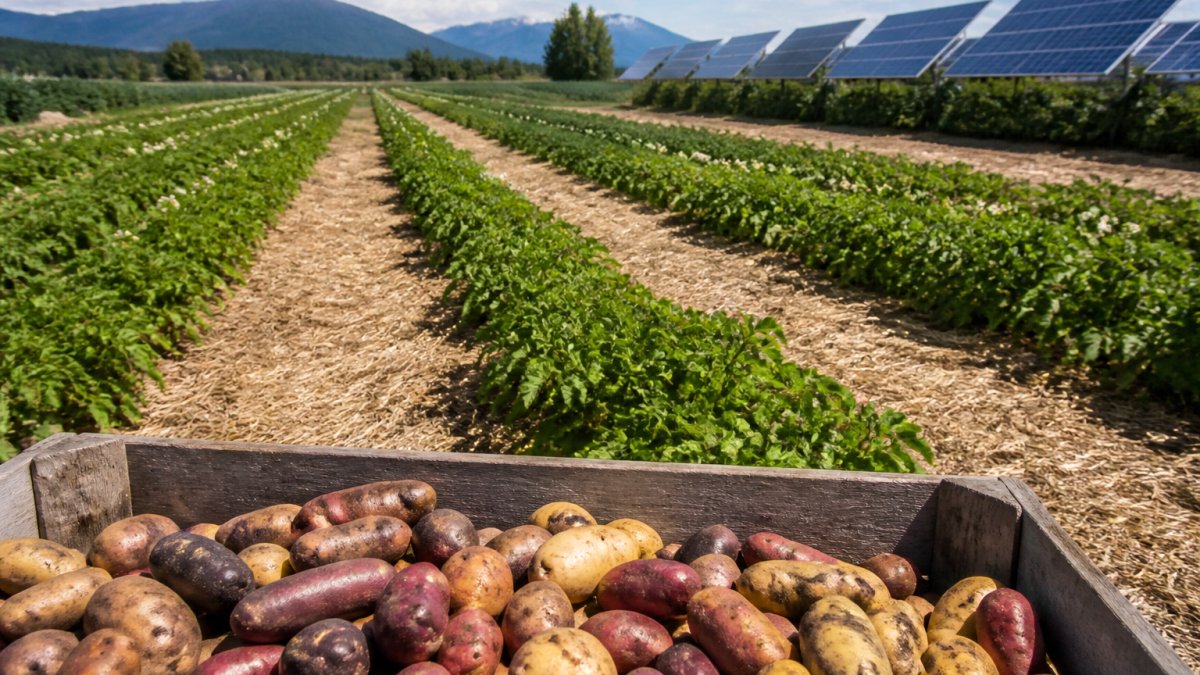
Certified organic seed potatoes are a specific product with a specific paper trail, and the label means less or more than many buyers assume. Here's what the certification actually checks, and what it leaves to you. Soda Springs Solar Gardens LLC grows early-generation FY1 and single-drop stock, so the questions below are the ones we'd want any buyer to ask.
Organic certification governs how the crop is produced: the land history, the inputs applied, and the handling of the harvest. It does not, by itself, guarantee that a tuber is free of every pathogen. Those are separate questions, and the difference matters when you're choosing seed.
Ask any seller for three things: the certifying body, the certificate for the specific lot, and the generation of the stock. Read our single drop seed potatoes guide to see how tuber size relates to planting. See our certified seed potatoes page for an example of how the certifying body and tissue-culture origin are stated.
The label covers different questions than many buyers assume, so here is how the checks divide.
Question | What certification checks | What it does not guarantee |
How was the crop grown? | Organic production system and inputs | Freedom from every pathogen |
Is the planting stock healthy? | Seed-potato health status through the certifying program | Organic production |
What should you ask the seller? | Certifying body, lot certificate, stock generation | Zero disease risk |
Organic vs. Conventional Seed Potatoes: What Changes and What Doesn't
The core difference is the production system, and it is worth being precise about what that does and does not buy you.
What does not change is the biology of the tuber. Organic status is a production claim, not a pathogen test. A certified organic lot can still carry disease if the source stock was compromised, and a conventional certified lot can be remarkably clean.
Certified organic seed potatoes: Organic production verified; seed-potato health status depends on the certifying program and generation. Best fit when you want your garden's inputs to stay consistent with an organic system and you are willing to pay a premium and accept narrower variety availability.
Certified conventional seed potatoes: Health status verified through the seed certification program; production system is conventional. Often the widest variety selection and the lowest cost per pound among inspected stock. A reasonable choice when your priority is clean planting stock and your garden is not managed to organic standards.
Grocery-store potatoes: Neither organic production (unless labeled) nor seed-potato health certification applies. Often treated to suppress sprouting, handled for eating rather than planting, and not inspected for the pathogens that matter in a garden. The cheapest per pound and the highest risk.
Key Takeaway Organic certification tells you how the crop was grown. Seed-potato certification tells you how healthy the planting stock is. Choose based on which of those two questions you actually need answered.
Seed Potatoes vs. Grocery Store Potatoes: Why Table Stock Fails in the Garden
Many gardeners try grocery potatoes to save money. The trade-off is a higher chance of losing the crop to disease, which usually costs more than the seed you saved.
The Seasonal Homestead
The Risk of Introducing Blight and Other Pathogens
Watch out: a plant that looks vigorous at emergence can still be infected. Visible health is not proof of freedom from pathogens. Learn how to source and grow pathogen-free seed potatoes to lower this risk.
How to Verify Certification and Seed Quality When You Buy
Then verify the seed-potato health side:

Seed class and generation: Early-generation stock (for example, nuclear or foundation classes) generally carries a lower pathogen load than later generations. The class should be stated on the listing or the tag.
Lot or tag information: Certified seed potatoes are sold with a tag or lot number that ties the tubers to a specific field inspection and test record. Ask for it.
Inspection status: The lot should have passed the relevant state certification inspections for the diseases that program tests, which commonly include late blight, bacterial ring rot, and virus panels depending on the state.
Tuber size grading: The listing should state the size range so you know what you are planting and whether whole-tuber planting is practical.
Sourcing history: Where and how the stock was grown, including the generation chain back to the nuclear stock.
Best Seed Potato Varieties for Home Gardens
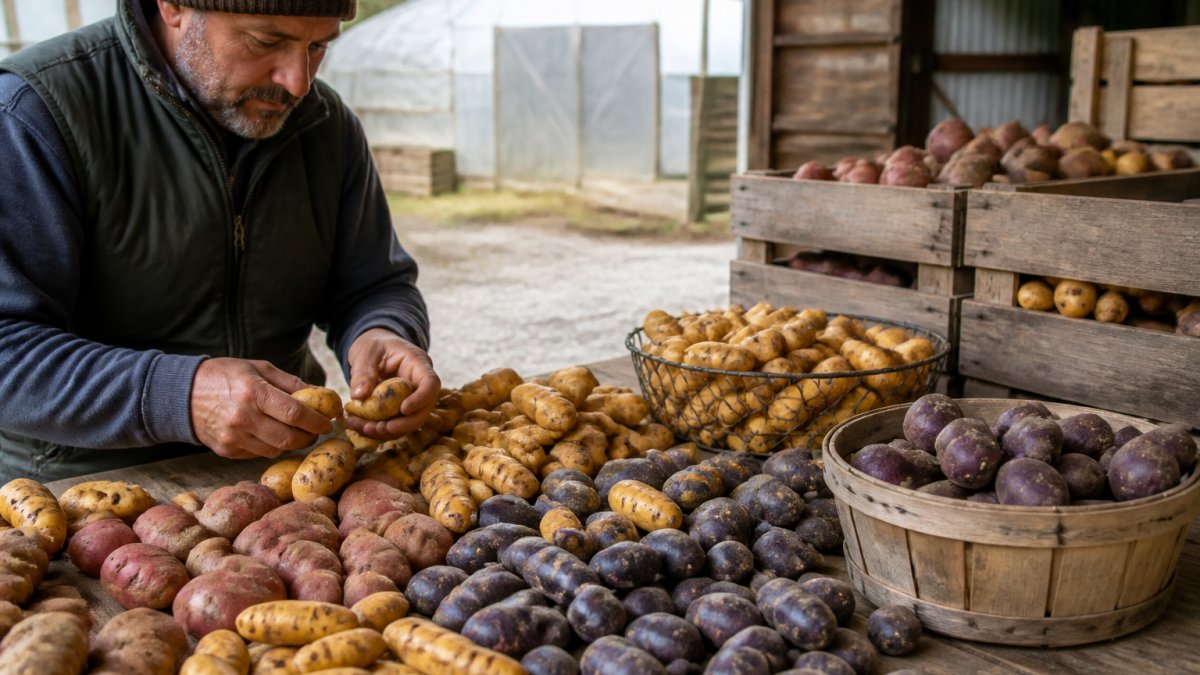
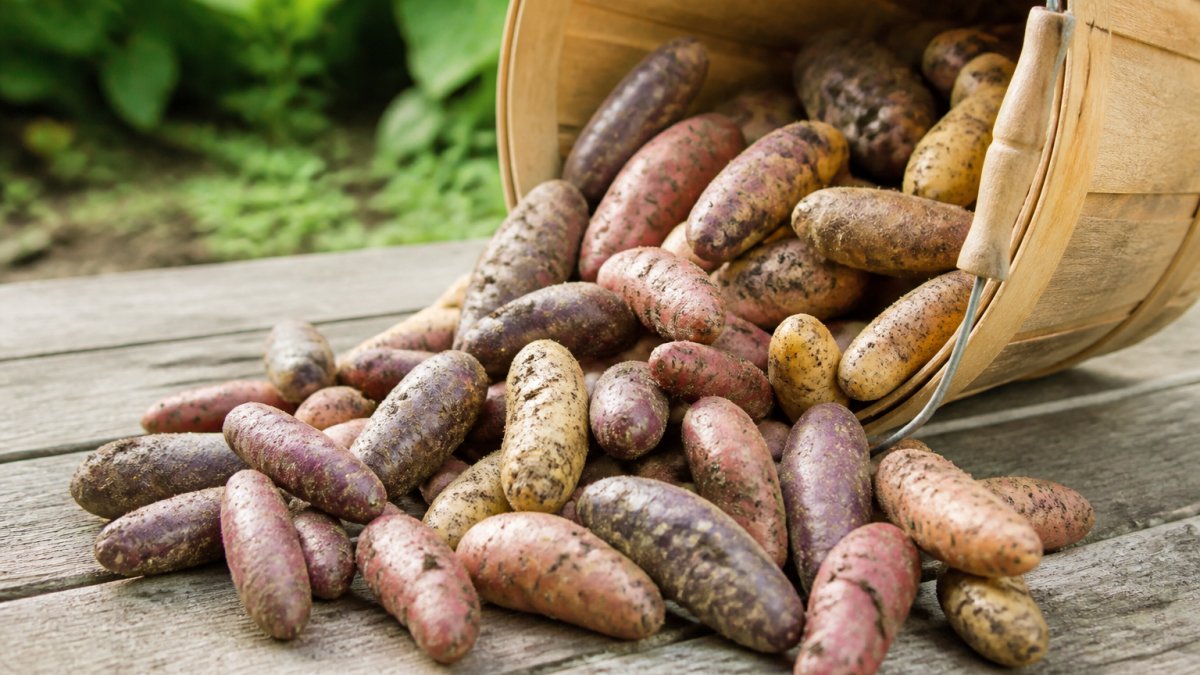
Match the variety to your cooking. Waxy fingerlings hold their shape when roasted, while floury types suit baking. Colored varieties add visual interest and often a distinct flavor. Compare the best potato varieties for backyard gardens to find a match for your plot.
How to Store Seed Potatoes Before Planting
Store seed potatoes in a cool, dark, humid place, ideally between 40 and 45°F, until planting. Light causes green skin and overly tough sprouts, while warmth drives sprouting too early.
Planning Your Order: Quantity, Cost Trade-offs, and Your First Planting
Soda Springs Solar Gardens LLC prices depend on quantity, dates, and delivery, so check the current product pages or request a quote for exact figures.
Frequently Asked Questions
What are certified organic seed potatoes?
Certified organic seed potatoes are tubers grown under an organic production system that a third-party certifier inspects and verifies against USDA National Organic Program standards. The certification covers how the crop was grown, including soil management, inputs, and records of what was applied. It does not by itself guarantee that a tuber is free of every disease, which is why buyers should also ask whether the stock was tested for pathogens and how it was grown and handled. Look for the USDA organic seal and ask the grower for their certificate or certifier name.
Why should I choose certified organic seed potatoes over grocery store potatoes?
Grocery store potatoes are sold for eating and are often treated to prevent sprouting, which can reduce vigor when planted. They also have no documented disease history, so they can carry blight or other pathogens into your garden. Certified seed stock is grown for planting, inspected in the field, and sold with a known source. For home gardeners, that means more predictable emergence, stronger plants, and less risk of introducing disease into your plot.
Do I need to buy certified seed potatoes every year?
Many home gardeners save their own tubers, but disease can build up in saved stock over successive seasons, and yields often decline as seed ages. Buying fresh certified stock each year, or at least every few seasons, is the safer choice when your plot has had blight or other problems before. If you save your own, select only healthy, vigorous plants and store tubers carefully. Compare your harvest over time to decide whether replacing your seed stock is worth the cost for your garden.
How should I store seed potatoes before planting?
Store seed potatoes in a cool, dark, humid place, ideally around 40 to 45 degrees Fahrenheit, with good airflow. Keep them in paper bags or open crates rather than sealed plastic. Light causes greening and sprouts that grow long and weak. Check tubers every few weeks and remove any that show soft rot or disease. Chit them, meaning let short sprouts develop, about three to six weeks before planting for an earlier, more uniform harvest.
Comments